
We do the work
Your outreach cards, finding businesses in your ZIP codes, contacting them, and managing the steps of the deal. No charge.
Build Sep 29, 2026, 5:58 PM ET · version 51f955b
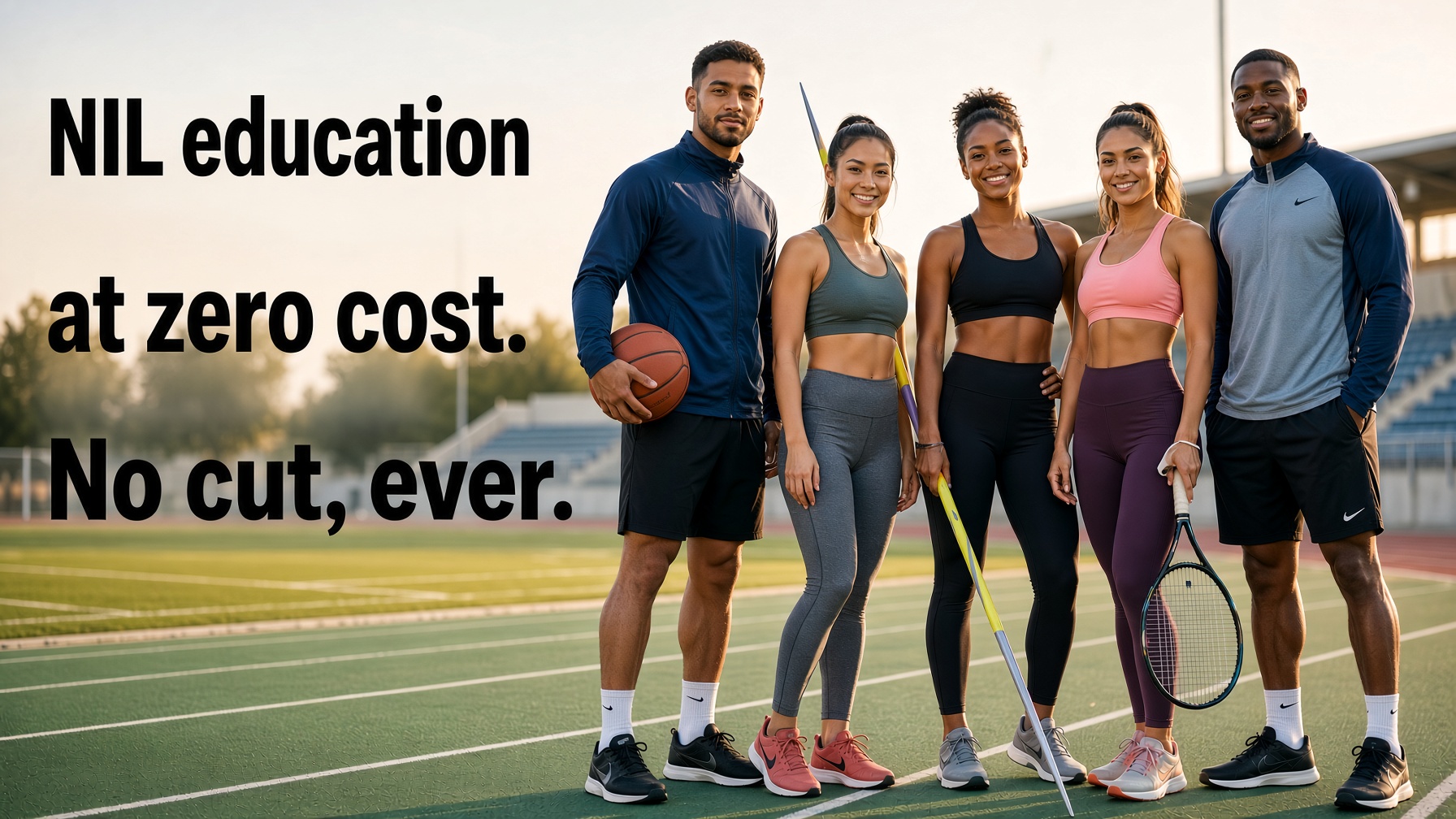
Capital Forge League is a nonprofit. When you are a verified CFL athlete on a team, our NIL support costs you nothing: we make your outreach cards and reach out to local businesses near you. We take no cut of your NIL money. The business pays you directly.
Read the NIL disclosure: CFL is an outreach facilitator, not your NIL agent, and guarantees no result.
Why we do this
NIL money has gone mostly to a few sports and a few names. Women's sports have been left out most of all. The softball pitcher, the volleyball setter, the swimmer and the wrestler often hear nothing, and when an offer does come, someone wants a share of it.
A local business doesn't need a national star. It needs someone the neighborhood knows: the families in the stands, the kids at the youth clinic, the classmates who eat down the street. That can be you, in any sport. Reaching those athletes without taking anything from them is part of our nonprofit mission.
What zero cost means
Your outreach cards, finding businesses in your ZIP codes, contacting them, and managing the steps of the deal. No charge.
CFL takes no cut and no fee. The business pays you directly into your own account. CFL never holds your money.
Never sign an NIL contract you have not had reviewed. We tell you what to look for — scope, term, pay, exclusivity and how it ends — and you are free to have your own attorney read it.
Why it costs you nothing: donors. Capital Forge League is a nonprofit, and donations pay for the outreach and the course, so athletes never have to. Give to keep it at zero cost →
Where we can help with deals: CFL registers as an NIL organization state by state and works deals only where it is registered. We are starting with Florida. Until your state is registered you can still register, take the course and get your outreach cards ready.
How it works
Your sport, school and position, your NIL situation, the kinds of business and ZIP codes you want, your headshot, and a government ID. You choose a username and password for your own portal.
We confirm who you are, your school and your sport. Outreach support starts once you are verified and on a CFL team.
Your headshot goes straight into a set of outreach cards made for the businesses you chose. No studio, no photo shoot, no cost.
CFL contacts local businesses in your ZIP codes on your behalf. Nothing about you is sent without your approval.
You are told who it is and what they have in mind. You decide whether to go further.
The business approves the ad, then you do (and your parent or guardian, if you are under 18).
CFL's standard NIL agreement, filled in for your deal. Have it reviewed by an attorney before you sign, and take the time you need to read it yourself.
When a contract is offered, you add your payment details in your portal. The ad runs and the business pays you directly. CFL never holds your money and takes no cut.
Your outreach cards
These are examples of the cards CFL sends to local businesses for you. Your headshot goes in the photo frame, with your name, sport and school. You approve every card before a business sees it.
Put the town's favorite student-athlete behind your signature menu items.
Your nameSoftball · Your school
Bring neighborhood shoppers in with an athlete signing or appearance.
Your nameVolleyball · Your school
Put your business name on a youth clinic led by a local athlete.
Your nameSoccer · Your school
Examples only. Your cards show your own photo and details.
Zero cost, every athlete
One topic a week, a few short lessons, things to do that week, and a five-question quiz to check what you learned. Zero cost to every athlete, whether or not you are on a CFL team yet.
Goal: Know what you may and may not do before anyone offers you a deal.
NIL is your right to be paid when a business uses your name, your picture, your voice or your personal brand to promote itself. College athletes have been able to earn from NIL since July 2021. It is payment for work you do for a business: posts, appearances, ads, camps. It is not payment for playing.
Several sets of rules apply at once: your school's NIL policy, your state's law, your conference, the NCAA or your college association, and, in high school, your state high school athletic association. Some states let high school athletes do NIL deals and some do not. Your compliance office (in college) or athletic director (in high school) is always your first call.
No pay for performance (money for wins, points or stats). No deal that is a reward for choosing or transferring to a school. No use of school logos, uniforms or facilities without the school's written permission. Many schools also bar categories such as gambling, alcohol, tobacco, vaping, adult content and firearms.
Most colleges require you to report NIL deals, often before you sign or within a set number of days. College deals above a set amount with outside businesses are also reported to a national clearinghouse. Missing a report can put your eligibility at risk. Keep a copy of everything you report.
A parent or guardian signs with you, every time. At CFL a guardian approves every ad and every contract before anything runs. If you are an international student on a student visa, talk to your school's international office before any NIL work; visa rules can forbid it.
What is an NIL deal?
A business offers $50 for every touchdown you score. What is the problem?
Who should you contact first with a question about your school's NIL rules?
Can you wear your school uniform in a paid ad?
You are 16. Who signs an NIL contract with you?
Answer all 5 questions to check them. Your answers stay on this page and are not saved.
Goal: See the value you already have, especially in your own community.
A local business does not need a national audience. It needs people who live near its door. Your teammates, classmates, their families, your coaches and your town already know you. A softball pitcher, a volleyball libero, a swimmer or a wrestler can matter more to a neighborhood pizzeria than a star three states away.
Brands have historically overlooked many sports, and women's sports most of all. That is exactly why CFL does this work for free. Your sport has a loyal local following: parents in the stands, youth players who look up to you, schools and clubs. Those are the customers local businesses want to reach.
Your brand is what people think of when they hear your name: your sport, your work ethic, your school, your causes, how you carry yourself. Write it in one sentence. Every post and every partnership should fit that sentence.
Keep your public accounts clean and current: a clear photo, your sport and school (if allowed), and a way to reach you or your guardian. Look at your old posts the way a business owner would. Never share your home address, your schedule in real time or anything you would not want a coach to read.
Real businesses do not ask you to pay to get a deal, to send money first, or to move the conversation to a private app before anything is in writing. If someone rushes you, pressures you or asks for secrecy, stop and tell your guardian or CFL.
Why might a local pizzeria want to work with a softball player from the nearby high school?
What is your personal brand?
A 'business' asks you to pay $100 to join their sponsorship program. What should you do?
Which should you never post publicly?
Why does CFL focus on athletes in sports that brands overlook?
Answer all 5 questions to check them. Your answers stay on this page and are not saved.
Goal: Choose the businesses and ZIP codes that fit you, and know what you can offer them.
Start with places you already use and believe in: restaurants and pizzerias, car dealerships, Main Street shops, gyms and trainers, home and local services, youth camps and clinics. A deal with a business you actually like is easier to promote and more believable.
Pick up to five ZIP codes where people know you: where you live, where your school is, where you train, where your family shops. CFL looks for businesses in those ZIP codes and reaches out on your behalf.
Social posts and stories, an appearance or a signing, a youth clinic under the business's name, a menu item or product with your name on it, a spot in a local ad. Start small and deliver well. A business that is happy with one month usually wants another.
CFL prepares outreach material for you and for the kinds of business you chose, and contacts businesses in your ZIP codes. Nothing goes out about you without your approval (and your guardian's, if you are under 18). When a business is interested, you decide whether to go further.
Which business is the best first fit?
Why choose ZIP codes?
Which is a realistic first offer to a local gym?
Can CFL send outreach about you without your approval?
A youth clinic sponsored by a local business is an example of:
Answer all 5 questions to check them. Your answers stay on this page and are not saved.
Goal: Read a deal line by line before you or your guardian sign it.
Who the parties are. Exactly what you will do (how many posts, which platforms, which dates, which appearances). How much you are paid and when. How long the deal lasts. Whether you can work with competitors (exclusivity). How you or the business can end it. What happens to the content after the deal ends.
Deals that last for years or renew automatically. Exclusivity that blocks a whole category for a long time. The business owning your name or image forever. Payment 'later' with no date. Anything that conflicts with your school's rules or your team's sponsors.
Paid posts must say they are paid. Use a clear label such as #ad or #sponsored, or the platform's paid-partnership tag, where people will see it. This is a federal advertising rule, not a style choice.
Never sign an NIL contract you have not had reviewed. Read the scope, the term, the pay, exclusivity and how it ends, and have an attorney look at it. You and your guardian approve the ad, then the contract. CFL does not take a cut of your pay.
Which should every NIL contract state?
What does exclusivity mean?
How should a paid post be labeled?
A contract says the business owns your image forever. What should you do?
Who approves a CFL ad before it runs?
Answer all 5 questions to check them. Your answers stay on this page and are not saved.
Goal: Get paid safely, keep records and plan for taxes.
The business pays you directly, into your own account (or one your guardian holds for you). CFL never holds your money and takes no fee. Never give anyone your bank password or send money to 'unlock' a payment.
Money and free products or services you receive for NIL work are generally taxable income, whether or not you receive a tax form. Businesses often send a form (such as a 1099) at the start of the year. You are usually treated as self-employed, which means self-employment tax as well as income tax.
Put a share of every payment into savings for taxes as soon as it arrives. If you earn regularly you may need to pay estimated taxes during the year. Ask a tax professional (many communities have free tax help for students) how much to set aside for your situation.
For every deal, write down the business, the date, what you did, what you were paid (including products), and any costs you had. Keep the contract and the payment record together. Your school may also ask for these.
NIL earnings can affect need-based financial aid. Ask your financial aid office how your income is counted before you take on large deals.
Who pays you in a CFL NIL deal?
A business gives you $300 of free gear for posts. Is that income?
What should you do when an NIL payment arrives?
Someone says you must send $50 to release a $500 payment. This is:
Which office can tell you how NIL money affects your financial aid?
Answer all 5 questions to check them. Your answers stay on this page and are not saved.
Goal: Put it together: your brand, your businesses, your rules, your money.
One page: your brand sentence, the kinds of business you want, your ZIP codes, what you can offer, your school's reporting steps, your guardian (if under 18), where you are paid, and how you set money aside.
Practice a thirty-second introduction you or CFL can use with a business: who you are, your sport and school, why you believe in their business, and one simple thing you would do for them.
Treat every deal as work experience: meeting deadlines, communicating with a client, measuring results. Those are the same skills employers and investors look for after sports.
When you are a verified CFL athlete on a team, CFL gives you NIL outreach support at no cost, in every state where CFL is registered to do so. We prepare your outreach cards, contact businesses in your ZIP codes, point you to attorney review, and take no cut of your NIL money. CFL is an outreach facilitator, not your NIL agent or attorney. It does not negotiate for you and cannot guarantee any response, offer or result.
What belongs in your NIL plan?
A good thirty-second pitch includes:
What does CFL charge a verified athlete on a team for NIL outreach support?
Where does CFL give NIL outreach support?
Which skill from NIL work carries into a career after sports?
Answer all 5 questions to check them. Your answers stay on this page and are not saved.
This course is general education, not legal or tax advice. Rules differ by state, school and association: your compliance office or athletic director has the final word.
Questions
Already registered for NIL? Your portal has your deals, your cards and your payment details.
Sign in to your NIL portal